Start with a year-round worsted
If you are buying one suit, make it a mid-weight worsted wool. Wool breathes, resists wrinkles, and handles a dry climate well. A Super 110s to 130s cloth is the sweet spot for most men: refined enough for a boardroom, durable enough for weekly wear. Navy and charcoal work in every season.
For summer: open weaves and linen blends
Utah summers are hot, but dry, so you need breathability more than moisture management. Look for lighter weights and open weaves. Wool-linen blends give the cool feel of linen with fewer wrinkles. Our 2026 Spring/Summer catalog includes an Angelico linen and wool range and an Olimpias summer corduroy, alongside lightweight Marlane cloths.
For winter: weight and texture
For winter, choose heavier cloths: flannel, tweed and textured wools that hold warmth and look right with an overcoat. A sport coat in a bold winter texture is often a better buy than a second winter suit, because it works with trousers and denim too.
For travel and long days: stretch and performance
If you fly often, or wear your suit from morning to night, a cloth with natural stretch or a high-twist yarn recovers from creasing and moves with you. The Marlane Extender® 4 Seasons and Vivo Stretch ranges in our catalog are built for exactly this.
Colour and the mountain light
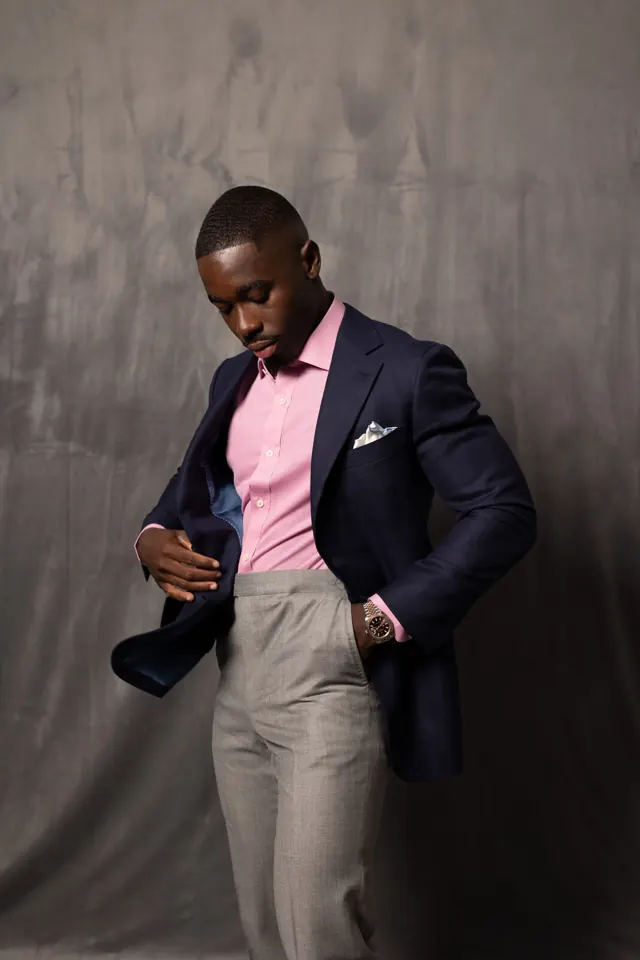
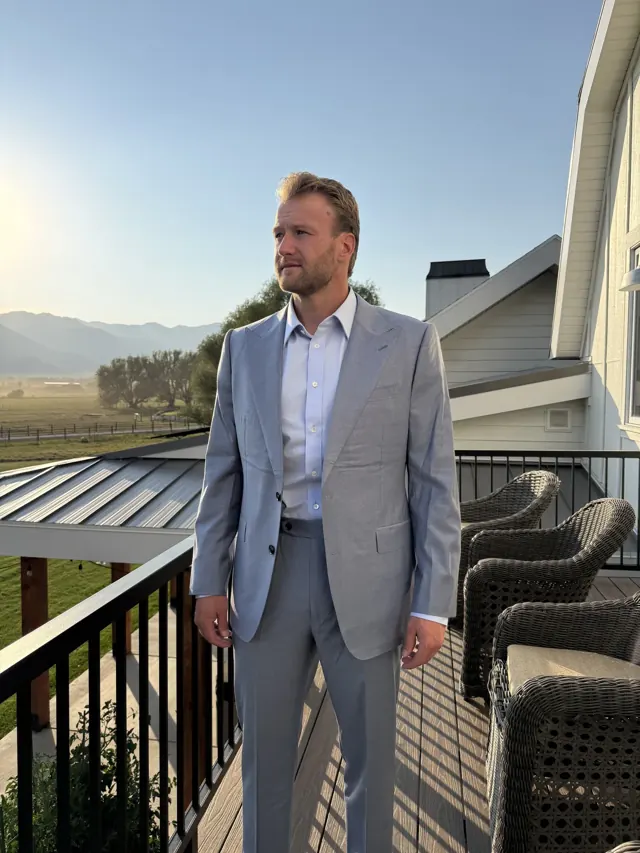
Utah's high-altitude sun is bright and clear. Mid-blues, greys and earth tones look rich in it; very pale cloths can look washed out in photographs taken outdoors at midday. For evening, midnight navy reads deeper than black under artificial light.
Understanding Super numbers
The Super number measures fibre fineness, not quality on its own. Higher numbers (150s to 180s) feel softer and drape beautifully but are more delicate. Lower numbers (100s to 120s) are more durable. You don't need to know the difference before you arrive; that is Kobe's job. You just need to know how you want to feel when you wear it.